Flavius Ardelean-Bachmann’s books lie along the fault lines of the familiar. Across novels and stories for adults and younger readers, he wrote about people who lose their way in shifting landscapes, who question their own memories, or who find themselves transformed by unnamed forces.

Miraculoasa viață uitată a lui Iris Cartier, novel: published in Romanian in 2023 by Polirom. In a grim orphanage beside a nameless town, lonely Iris has only her rag doll, Siri—until she finds a magic pearl hidden in its chest. One breath over it opens the way to Theatre Cartier, a forgotten underworld of sleeping puppets, dust‑and‑rust creatures and the goddess Mamamana. A dark, enchanting journey through shadows and monsters toward the one thing Iris—and each of us—must find: her own true self. Winner of the Carturino Best Children’s Book of the Year Award.
Vene rare, novel: published in Romanian in 2021 by Nemira. A man comes home broke to his parents’ old apartment block and finds it changed into something sickly and sacred. A neighbour called the Greek dies, but his corpse refuses to rot and floats serenely through his rooms. As cats vanish into a hidden church under the parking lot, as mortuary monks and one‑armed men wander the basement tunnels, as a new saint is sewn together from superstition and rot, the writer realizes the apartment block will only tolerate one version of its story, and it isn’t his. A grotesque, funny and painfully lucid novel about faith, bodies and the terror of being seen. Translated into Bulgarian for Colibri.
Câteva feluri de a dispărea, short story collection: published in Romanian in 2019 by Nemira. Seven people vanish: into their own faces, into villages that rearrange themselves, into a critic’s book, into the eyes of the dead, into mountains of rotting trash and into a city watched by something older than death. In these seven uncanny stories, Flavius peels back the everyday – a sculptor’s studio, a school corridor, a literary café, a marriage bed – to reveal the demons that quietly colonize our bodies, our memories and our streets. A dark, lyrical exploration of identity, madness and the terrible ease with which we slip out of the world without anyone quite noticing where we went.
Mecanopolis, novel: published in Romanian in 2019 by Polirom. When a schoolyard fight sends Oliver tumbling under a truck, he wakes up in the bizarre World from Under the Truck – a hidden world of robot bartenders, junkyard cities and a skeletal rock band called The Bones. Recruited as their new guitarist, Ollie is swept into a wild quest through Mecanopolis, battling automonsters and a rust‑mad iron king, all while chasing rumors that his missing father might be somewhere down there too. Mecanopolis is a fast, funny and heartfelt adventure for children about friendship, music and discovering who you are when the world flips upside down.
Bezna, novel: published in Romanian in 2018 by Polirom. When a living darkness swallows his world, a boy without a name and his faithful dog wake in a labyrinthine mansion where failed memories, monsters and lost children coexist. Recruited into a secret order of young storytellers, he must descend into hidden libraries, haunted cellars and tangled dreams to uncover the truth behind the darkness and the sinister masters who feed on stories themselves. A gothic adventure for children about courage, imagination and the fragile line between the tales we tell and the reality we live in. Nominated for the Book of the Year Award at the Brasov Cultural Awards.
Noumenoir, novel: published in Romanian in 2017 by Herg Benet. In the decaying labyrinth of Hotel A nus Dei, where failed and blocked writers are warehoused like hazardous waste, former novelist Radu Lenea stumbles into a lethal conspiracy over a forbidden manuscript said to contain the ultimate form of literature – the “noumenoir” – capable of ending writing itself. Between corrupt critics, underground factions and a nightmarish city that feeds on stories, reality and fiction bleed together as Radu fights through smoke, gunfire and insomnia to escape a world that would rather destroy him than let him stop reading.
Bășica Lumii și a neLumii (Miasma #2), novel: published in Romanian in 2017 by Herg Benet. A dead man is dragged back to life and walks again as a living skeleton. A rich man’s daughter is trained as a soldier and meets her great love. A horse‑headed wanderer falls out of the world into the un‑world, and a saint wakes in a new body, flanked by an army of invisible warriors. These four figures march toward a final battle “for love and against evil” in this dark, baroque fantasy of saints and monsters that asks whether good and evil are anything more than stories we tell, and what happens when those stories go to war. Translated into German for homunculus verlag and into Russian for AST Publishing House. Winner of the Colin Award for Best Fantasy Series and nominated for the Babel Fish Award in Russia.
Miasma (Miasma #3), novel: published in Romanian in 2016 by Herg Benet. It begins when the priest of the city of Alraune finds a burned man lying on the church steps. He takes him in like a son, and the world quietly tilts: well‑dressed rat‑people slip through alleys, a sinister man with a horse’s head visits citizens in their sleep, and the town’s teenage girls fall into a coma no healer can break. As fear spreads and the border between worlds wears thin, Alraune enters an age of terrible miracles, where anything is possible and Humans and un’Humans will clash in a final battle at the city’s gates. Translated into Russian for AST Publishing House. Winner of the Colin Award for Best Fantasy Series.
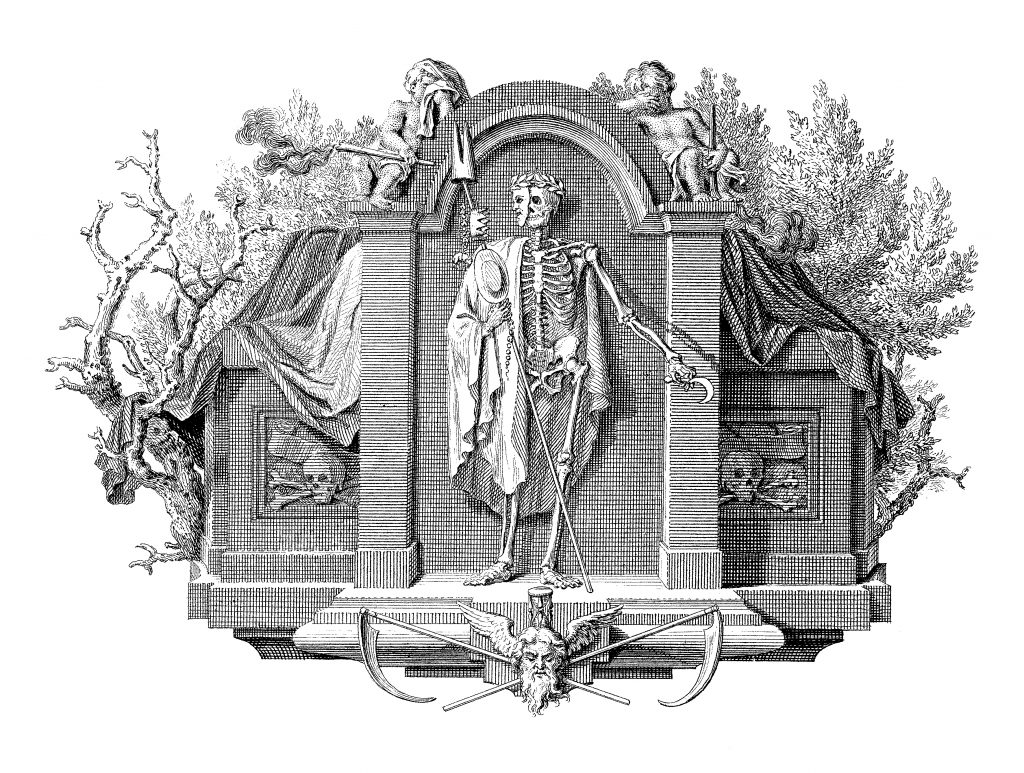
Scârba sfântului cu sfoară roșie (Miasma #1), novel: published in Romanian in 2015 by Herg Benet. Flavius turns a mock‑medieval pilgrimage narrative into a hallucinatory theology of flesh, guilt and storytelling. Guided by a sardonic skeleton, we follow Saint Taush from ghost‑city to nascent Mandragora as he founds a holy town, fights a seeping otherworld and slowly becomes both its savior and its monster. Layering fairy‑tale cadence, grotesque body horror, sly metafiction and village gossip, the book reads like a lost apocryphal gospel about how worlds are stitched together—by stories, by sacrifice, and by the thin red thread that runs between man and un‑man, world and un‑world. Translated into German for homunculus verlag and into Russian for AST Publishing House. Winner of the Colin Award for Best Fantasy Series and nominated for the Babel Fish Award in Russia.
Bizaroproze, short story collection: published in Romanian in 2014 by Herg Benet. Flavius mutates the familiar landscape of blocks, bars, trams and literary cafés into a laboratory for grotesque, exuberant invention. Mixing body horror, bizarro absurdism and a very specific Romanian social and literary satire, these pieces push everyday situations until they crack open, revealing fungi, monsters, angels, and the petty vanities of writers and critics alike.
Acluofobia, short story collection: published in Romanian in 2013 by Herg Benet. Flooded cities, cursed rooms, forgotten mines and impossible motels become stages for a very contemporary kind of nightmare. Blending Romanian folklore with cosmic unease, body horror and psychological disintegration, these stories push ordinary people just far enough past the edge of the familiar for the truly uncanny to emerge. Winner of the Colin Award for Fantasy. One of the stories was published in the English and in the Hungarian editions of the Valancourt Book of World Horror Stories.
Îmblânzitorul apelor, novel: published in Romanian in 2012 by Casa de Pariuri Literare. A catastrophic flood is turned into an unflinching portrait of a family under pressure and a writer losing control of his own story. Blending domestic realism with apocalyptic imagery and a subtle metafictional edge, the novel probes guilt, love, and survival when both the world outside and the inner life begin to collapse. The result is a dark, compelling narrative that feels at once intimate and disturbingly universal. Nominated for Best European Debut at the Festival du Premier Roman de Chambéry in France.
As of 2024 Flavius no longer writes fiction. He leads a private, contemplative life away from the public sphere and does not participate in promotional activities, interviews, or public events anymore. For publishing rights inquiries, please use the contact form.